
I love fruit curds, they might be my favourite of all the preserves, sweet or savoury. In fact I’m not even sure if a curd is a true preserve or not; it isn’t chock-full of sugar like a fruit jam, plus there are eggs and butter in there too; the eggs technically make it a kind of custard. These ingredients mean that fruit curd doesn’t keep for very long, maybe two months in all. That said, they rarely last that long.
Looking in the recipe books, the earliest mention of the term lemon curd I have found goes back to 1844 in The Lady’s Own Cookery Book by the splendidly named Lady Charlotte Campbell Bury. The recipe is rather different though because the lemon curd is literally that; lemon acidulating cream to form curds which could then be separated from the whey through some cheesecloth.
You can go further back to find recipes for lemon curd, though it is called lemon cheese, and it seemed to generally be used for lemon cheese cakes which are what I would call nowadays lemon curd tarts. When you look in the books, the old recipes give the instruction to rasp the lemons’ skins “well with sugar” to extract the zest and aromatic oils. This seems rather a curious thing to do; perhaps the zester or fine-grater hadn’t been invented, or maybe it was terribly difficult to lay one’s hands upon such a thing. It all makes perfect sense in the end though because the sugar in the larder wasn’t granulated in a bag like we get it now, but was a solid, long, tapering palisade – a sugar loaf. You could simply crack a piece off and rub it against your lemons to get all the flavour out of that pesky zest. I have found these instructions for recipes as recent as 1974 (Jane Grigson, English Food), if you to attempt it buy those posh sugar lumps that are all irregularly shaped, normal ones will just crumble.

A 19th century sugar loaf and tongs
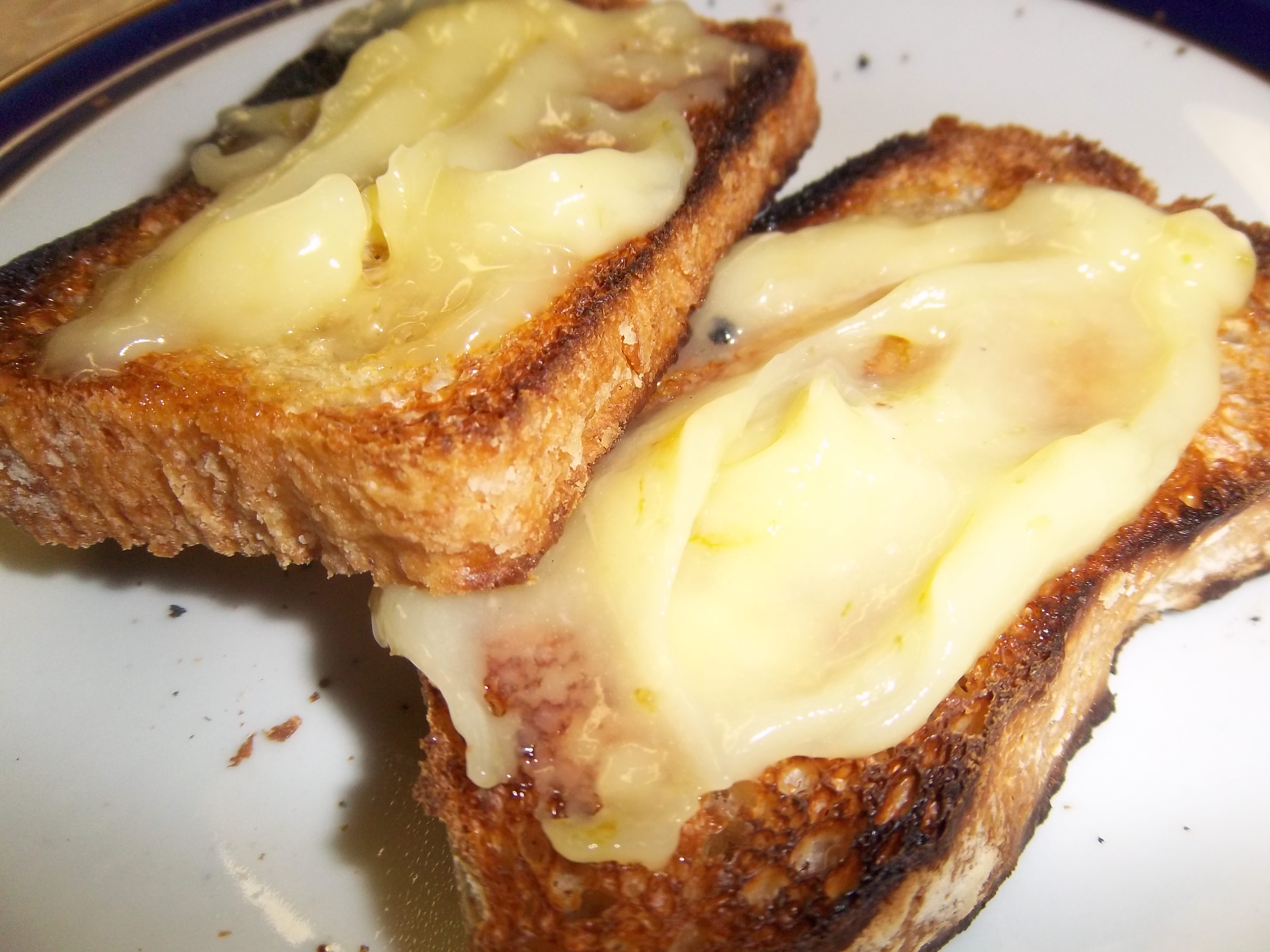
Curds can be used for so many things: cakes, tarts, pies, steamed puddings, American muffins, as a pancake topping or filling, or at its best on hot toast. Though I have always thought lemon curd ripple ice cream would be good.
Curds don’t just come in lemon yellow of course, you can make one from any fruit that the juice can be easily squeezed from: orange, grapefruit, passion fruit and pineapple are all ones I have spotted at one time or another.
Here’s my recipe for lime curd. Have a go at making it; it’s very easy to make because it’s difficult to curdle the eggs as they are stabilised somewhat by the acid and egg whites. It is wonderfully tart and not too sweet. Honestly, you’ll never go back to the bought stuff.
If you like the blogs and podcast I produce, please consider treating me to a virtual coffee or pint, or even a £3 monthly subscription: follow this link for more information.
Lime Curd
This recipe makes around 1 UK pint (that’s 20 fl oz for any non-Brits). If you think things might be too sharp, add an extra egg and a couple of ounces of butter.
Ingredients
the zest and juice of 5 limes
5 oz salted butter
8 oz sugar cut into small cubes
4 large eggs
Set a mixing bowl over a simmering saucepan of water and add the lime zest and juice, butter and sugar.

Let it warm up, the sugar dissolve and the butter melt. Beat the eggs in a separate bowl and strain through sieve into the juice. Stir with a wooden spoon until the eggs have amalgamated and thicken – this will take at least five minutes. When very thick, take off the heat but keep stirring for a minute or two as the eggs may carry on cooking if left in contact with the still hot bowl’s inner surface.

Pot into sterilised jars and allow to cool. Unless you have a nice cool larder, I would store them in the fridge, especially once opened.
Also see this other post with more curd recipes…
 British Food: A History
On the curd/cheese front it was always lemon cheese in Leeds sixty years ago – you were just too late to catch the name change – by the late sixties the new name was well ensconced. Another malign influence of southern food writers?
LikeLike
I did not know that. Everyday’s a school day. Perhaps you are right on the southern writer front. Elizabeth David called it curd. That said so does Jane Grigson; which surprises me with her being a northern lass.
I briefly thought that I should start calling them cheeses, but then youhave the fruit cheese made from fruit and sugar, so perhaps having the name curd, will prevent confusion….
LikeLike
My family–from Stockport, Cheshire–has always used the term “lemon cheese”. My grandmother, born in the early 20th century, my mother born in 1929 and myself born in 1952 all made lemon cheese for our families. I have just made a batch in Florida, USA where none of my neighbors had heard of it–but all enjoyed their jar!
LikeLike
Hi Ruth
Folk used to say the same in Yorkshire when I was a kid. Completely forgot about it, so thanks for reminding me… don’t think anyone uses the term anymore though.
LikeLike
i’m afraid to disappoint you but lemon curd is not the same as lemon cheese. lemon cheese is more of a jam recipe and keeps for months as does jam and it does not contain any eggs as curd does
LikeLike
Hi Steve
Yes you are right there are fruit cheeses that are like jams. It’s all very confusing. One sees old recipes for fruit cheeses that are basically curds, but then there are the ones you talk about. They have been around for a long time too, but one only find recipes explicitly calling them ‘cheeses’. They are very popular in America. When I lived there, almost every farmers’ market had a stall selling fruit cheeses. Back in the UK, these preserves are called cheeses now that there are curds.
In other words: we’re both right
LikeLike
Oh, and you just solved the problem of what to make for desert for fifty today – hens have been laying well so lemon meringue pie here we come
LikeLike
glad I can help!
LikeLike
Dessert of course
LikeLike
We just had a baby shower and served, gues what, lime curd! I love it too and home-made is really out of this world
LikeLike
What a coincidence! It is the best though…
LikeLike
Pingback: Forgotten Foods #2: Verjuice | British Food: A History
Love your history of lemon curd – thank you! Completing a post on lemon curd myself and I’m going to link with yours. Thanks again. My grandpa was from Liverpool, incidentally
LikeLike
Glad you liked my post – I’ll check yours out…
Liverpool is but a stone’s thrown away, though I hard;y ever go. i don’t know why!
LikeLike
Pingback: Lemon Curd and Other Love Stories | Pachamama's Beautiful Food
Pingback: Easter Limes | Mince + Dice
Pingback: When your friends give you lemons …
Pingback: Fruit Curds Revisited | British Food: A History
I stumbled upon your blog while looking for lime curd recipes. Its wonderful 🙂 i have bookmarked it for bedtime reading
LikeLike
Thanks very much. So glad that you like it. I’ll be putting on a big load of accrued posts throughout January!
LikeLike
Thanks again for the inspiration – I have been making passion fruit curd thanks to you mentioning the possibility.
LikeLike
Great stuff! I am going to attempt a few unconventional recipes in a week or two so keep an eye out on the blog during February…
thanks for commenting
LikeLike
I have a few plans myself… I think this is something I could get addicted to.
LikeLike
Pingback: Summer tea time with Lady Baker's lemon curd | Lady Baker's Tea Trolley
Pingback: Recette #4 : lemon curd « Consulting Blogger
I would like to know if the same result could be achieved by reducing the amount of butter.
I have lived a British life for 45 years but never used lemon curd until recently and now I decided to make it, the result has been perfect texture, no a single problem on the making, looks perfect etc. etc. but I find the taste leaves something in the mouth, like the butter, or maybe it is the egg whites.
I have made a batch and pass it round to some British born friends for their judgement, but I still like to know from the experts if reducing the butter or the egg whites would help, this is just to save me the trouble to do the test myself.
Thanks for your help
Chonette
LikeLike
Hi Chonette,
It is possible to reduce the amount of butter, as many people dislike the buttery finish. It’s not something I ever notice myself, but others are very butter-sensitive, it seems!
I did write another post on fruit curds with an updated recipe, it might be useful to you!
The link: https://britishfoodhistory.wordpress.com/2013/12/02/fruit-curds-revisited/
Hope that helps!
LikeLike
Thanks for this, I will certainly experiment doing various ways and see what happens.
LikeLike
Let me know how you get on!
LikeLike
Pingback: Lemon Curd: my Favorite Treat - Aglaia's Table οn Kea Cyclades
Pingback: Dabbling in dairy – Goat’s curd cheesecake | Life and Cheese
Pingback: Coconut Lemon Cupcakes with Cream Cheese Frosting - The Spicy Ginger
Pingback: Lemon Curd – Gama de Sabores
Pingback: Lemon Curd and Goat Cheese Ice Cream Recipe - The Coquette Kitchen
Pingback: Lemon Raspberry Curd - We're Parents
Pingback: Lemon Raspberry Curd - We're Parents
Pingback: Lots of Lemons…… | POLENTA & JAM
Trying to research the history back to the possible beginnings of curd/custard/cheese. This was the first article that I read. Thank you.
LikeLike
Hey David…. thanks for the comment and glad you found my post. Glad others are interested in the same things as me. Haha
LikeLike
Pingback: Enquête privée #9 : étymologie de lemon curd | Le détective des mots
Pingback: Enquête privée #9 : étymologie de lemon curd (anglais) | Le Détective des Mots
New to your blog, and delighted to have found it; followed your Yorkshire curd tart recipe to general acclaim, and am now exploring farther. One question/suggestion: I’ve seen a recipe where you refer to “juice of four limes”. Well, while limes seem relatively stable I’m convinced that oranges and lemons have been bred up for size rather than flavour; so taking “the juice of two lemons” in a PRE-WWII recipe will give you a soggy mess – like “take twelve eggs” and a Victorian cake recipe. Do you think it might be a good idea to adopt a standard? I’m trying out 1 Tbsp/30 ml.
LikeLiked by 1 person
Hi Niels. I’m glad you found the blog and my recipe worked. For the lime curd recipe I don’t mind it being more limey one time and less the next. BUT I know that a good juicy lime will fill a 25ml shot glass…I make alot of cocktails. Haha. Hope that helps!
LikeLike
I now have my own Meyer lemon tree and ducks’ eggs from my son. I am making a lot of what I still call “Lemon Cheese” and share it with my neighbours, who love it, I am in NE Florida.
You mentioned US farmers markets selling a fruit preserve. I think you misremembered the name: I think they are called fruit butters not cheeses. In truth, I only know the eastern states and things may be different elsewhere.
I have started looking more critically at lemon cheeses in the supermarket: they are either bright almost luminous yellow or a pale grey colour. That myust be the additives. Also, all the supermarket lemon cheese over here has cornstarch thickener. I am going to stick with home made English style!!
LikeLiked by 1 person
Hi Ruth.
Duck egg lemon cheese sounds amazing!
I write that post a long time ago, so my memory may be wrong, but it was a market stall in St Louis that was selling fruit cheese and fruit butter.
The stuff you get in the supermarket is okay…as long as you buy superior stuff. The basic curds/cheeses are not very good. A little cornstarch can be useful if busy in the kitchen and one gets distracted…the cornflour stabilizes the egg and stops it scrambling. The supermarkets swap the egg for cornflour completely sometimes.
LikeLike
Pingback: Blood Orange Tarts with Rosemary - 12-Kitchens
Pingback: canary yellow lemon curd - surprising.recipes
Pingback: Lemon Lavender Tart, The Most Special Easter Dessert | 12 Kitchens
Pingback: kanariegele lemon curd - gerechtenweb
Pingback: How to Make Lemon Curd - Kira Bakes Gluten Free